
For those who look to imagination to keep us fighting, even in the face of collapse…
Hello all. This month’s newsletter is rather late, so thank you for bearing with me. First of all, if you haven’t yet, grab your Yuletide gift below.
Disclosure: Bookshop.org is an online retailer that supports independent, brick-and-mortar bookshops throughout the UK and US. I’m an affiliate, meaning that when you make a purchase through my links to Bookshop, I get a small commission at no extra charge to you. Happy reading!
This month, I wanted to take a moment to reflect on why any of us do the work we do. This is a worldbuilding essay, but perhaps not the sort you might expect.
In Minnesota and the wider US, the rule of law continues to break down. The oligarchs who are burning the world flaunt their impunity while continuing to push technologies that speed ecological disaster, discourage critical thinking, and encourage social isolation, delusions, and political siloing. And in Gaza, a genocide continues, even as it is documented in real time.
In the face of so much horror, it is easy to look to fantasy as an escape.
But fantasy — and speculative fiction in general — is far more than that. Whether you have been curling up with cosy tavern stories or dark academia or the latest dystopian blockbuster sequel, you have been arming yourself. Because always, when we read about magic, or dragons, or outer space and other worlds, we are opening ourselves up to the possibility that there are better ways of being.
Speculative Worldbuilding Informs Reality
Speculative fiction, as a whole, gives us tools that we can apply to our worlds, our real life worlds, in the here and now. Whether we practice empathy by reading about heroes who, on the surface, may not seem so heroic, such as Malik and Karina from Roseanne A. Brown’s Song of Wraiths and Ruin, or watch how resistance might unfold across a dozen different flash points in Adrian Tchaikovsky’s City of Last Chances, whether we consider how violence might be interlaced with radical community care in Micaiah Johnson’s Those Beyond the Wall or interrogate its necessity within the halls of Babel — our favourite fantasy and science fiction reads give us spaces to imagine different outcomes, and consider how we might bring some of that magic into our everyday lives.
Most of all, though, in times like these, fantasy gives us hope.
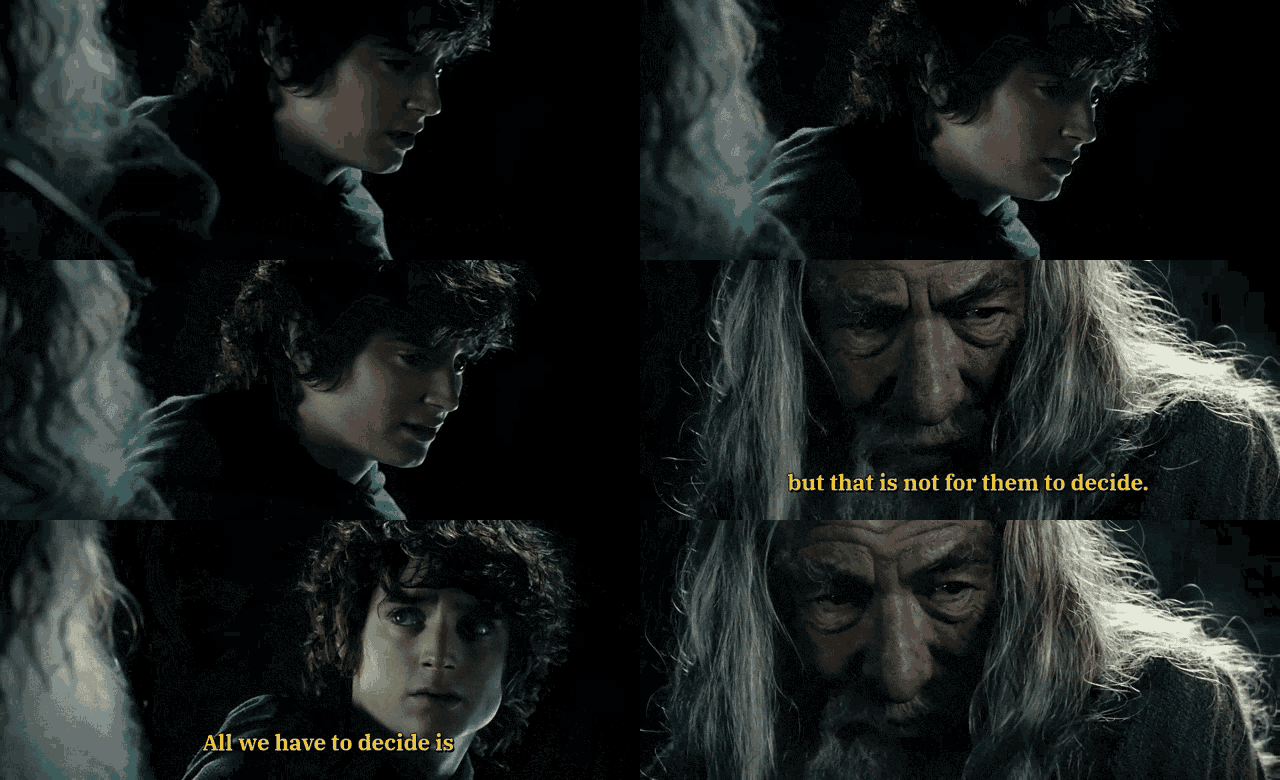
When we look at our reality through the lens of speculative fiction, worldbuilding and magic go beyond the page, to become a real-life effort that we partake in, day after day, week after week. By opening our imaginations, we can find ways to nurture the values we hold dear, to build resilience into our communities, and to face whatever comes next.
So to those of you following along with me thus far, a small request: if you feel comfortable sharing, please comment with what you’ve been reading recently and how it’s informed your perspective on current events, or any moments of hope or action that have inspired you lately.

Not a Bonus Quest
If, like me, you have been struggling with what to do, or how to help, here are a few small avenues where donations can make a difference.
Against the genocide in Gaza, I have collected these links, including both on-the-ground mutual aid and global humanitarian organisations:
Meanwhile, for the resistance in Minnesota, this is a collection of local funds.
Finally, if you are still in doubt that our world is descending into fascism — or have people in your life who are resistant to the idea and with whom you would like to be able to talk about it — I invite you to read this article about the Dual State and how business as usual doesn’t preclude dystopia.
I have done my best to fully understand the impact that these particular groups are making before sharing, but as always, your own research is invaluable. And if you have further resources that you would like to share, please do comment below!

Leave a Reply